VAYUANTRIKSH / publications / ssb-handbook ← back to publications

The SSB Handbook · By Group Captain HR Raghunath (Retd)

Chest No. 80

Every candidate is given one. For five days it replaces your name, your college and your family. This book is about what is left when it does.

248 pages · 24 chapters in five parts · foreword by a former Board President & a former GTO

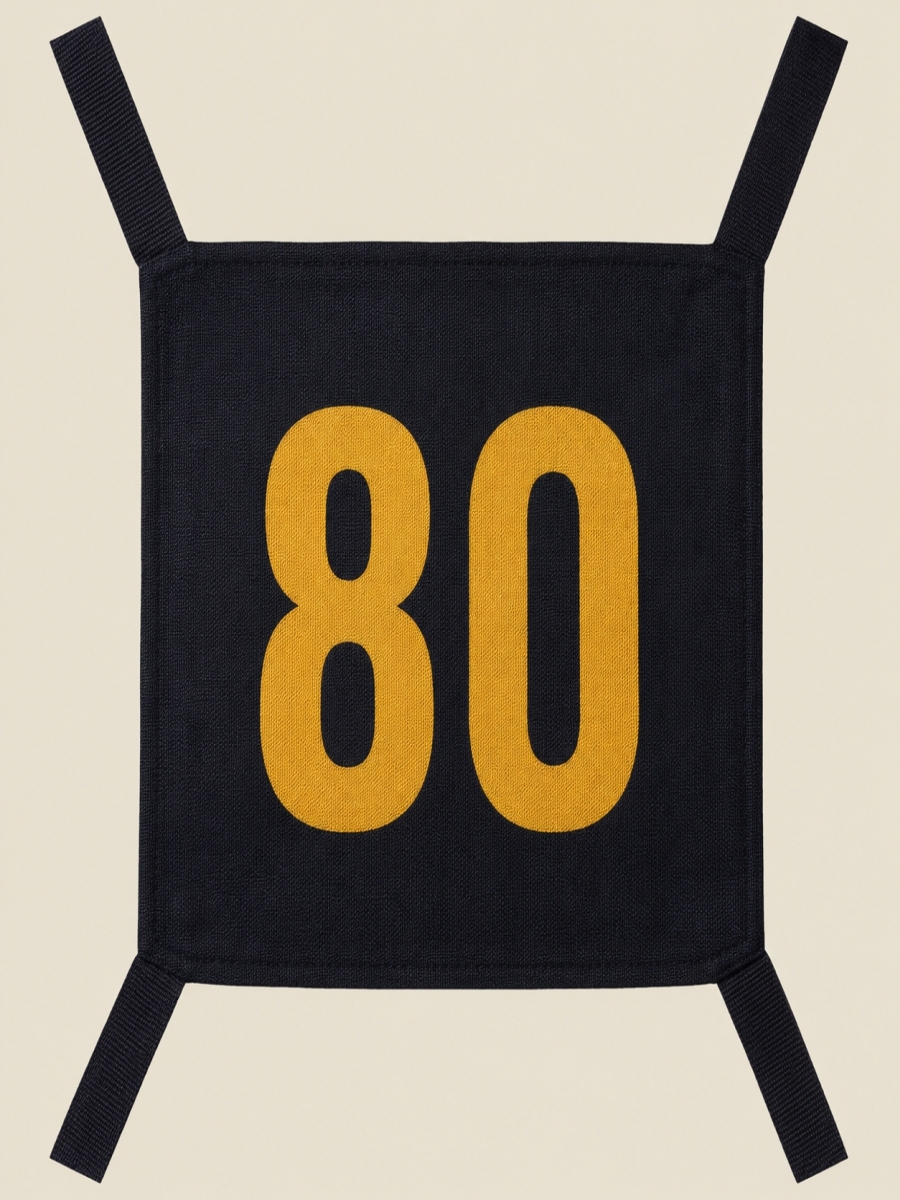
Chest No. 80 — the author's own SSB batch bib
CHEST NO. BIB images/bib-photo.jpg
~900 × 1200px · portrait

Five parts, in the order the Board runs them

Not a compilation of test formats. A designed arc — from what the Board is looking for, to what happens after it recommends you.

Foundations

What the Board is, what it watches for, and the ground you build before any test begins.

Ch. 1–4

The Psychological Tests

Screening, WAT, TAT, SRT, SDT — what your unedited mind puts on paper, prepared honestly.

Ch. 5–9

The Group Testing Ground

Where character stops being written and starts being watched — in a group, under fatigue.

Ch. 10–13

The Interview & The Inner Game

The conversation across the table, the awareness that feeds it, holding steady for five days.

Ch. 14–19

After the Recommendation

The medical board, the police file, the life that follows, and the candidates I never forgot.

Ch. 20–23

Performance is cheap. Any confident young person can manage an afternoon of it.

Coaching centres teach you to perform officer-like qualities for five days. The Board isn't measuring an afternoon — it's watching for what survives an assessor in the room, a group that can't be managed, and an interview that circles back to the same question from four directions. This handbook argues that the Board isn't trying to manufacture a personality. It's trying to find the one you already built, in the years before you ever heard the word "SSB."

"For some, character is the first thing they build. For some, it is the last thing they give." — Chapter 3, Building the Psyche

The five-day format, the fatigue, the repetition across three independent assessors — none of it is incidental. It exists because a person can act for an afternoon, but very few can act for five days without the groove they actually walk in showing through.

You just read the argument. Now feel it.

Chapter 7 covers the Word Association Test in full — but the fifteen seconds of pressure it describes are hard to understand until you've actually sat inside them.

  • A word appears — you have seconds, not minutes, to write a sentence before the next one replaces it.
  • Nothing is scored. The tool exists so you feel the reflex the book keeps describing, not to grade you.
  • Nothing you type ever leaves your browser — practice as often as you like, privately.
Free · No sign-up Try the WAT Practice Board →

Same format as Chapter 7, page 37

The ground doesn't lie. Neither does the obstacle course.

Chapters 11 and 12 walk through the GTO Tasks and what lies beyond the obstacles — but reading about a task and standing in front of it are two different tests.

  • Work through a simulated obstacle course and individual task, the way the GTO actually runs them.
  • See how sequencing, planning, and physical commitment get read, not just whether you finish.
  • Nothing is scored. The tool exists so you feel the task the book keeps describing, not to grade you.
Free · No sign-up Try the GTO Task Simulator →

Same format as Chapters 11–12, pages 52–55

Two people who sat on the other side of the table

The author was never part of an SSB assessing team himself, and says so plainly in the Preface. What he brings instead is thirty-four years adjacent to the process — and two forewords from people who ran it.

"Performance is cheap, and any confident young person can manage an afternoon of it." An honest, clear-eyed account of what actually decides a conference.

Air Commodore K.P.S. Virk (Retd)
Former President, Air Force Selection Board, Varanasi

"The obstacle is never only the obstacle. It is a mirror, held up for a few brief minutes — and in that mirror, the Board sees the person."

Wing Commander Anand Subhedar (Retd)
Former GTO, Air Force Selection Board · Managing Director, EVERAXIS India Pvt Ltd

Words on leadership, character & the mind

This book leans on psychology as much as it leans on soldiering — these are voices from both sides of that: officers who led under fire, and the thinkers who explained why people do what they do under pressure.

Loading…

A page from Chapter 1

No account or payment needed — this is the actual opening of the book, not a marketing summary.

Understanding the SSB Selection Process

Let me set the frame before anything else, because most candidates walk in without it. The Services Selection Board is a five-day, multi-assessor process built to test whether you already possess, not whether you can perform, the qualities of a commissioned officer. It is used across entry schemes: NDA, CDS, AFCAT, TES, and the various university and technical entry routes into the Army, Navy and Air Force. The eligibility criteria differ by scheme, but the SSB architecture that follows selection into it does not.

Notice what the Board is doing across these five days: it is watching you in isolation (psychology tests, where you cannot see what others write), in a crowd (group tasks, where you cannot hide), and one-on-one (the interview, where you cannot deflect). Three assessors, three independent methods, one candidate. A quality that shows up consistently across all three settings is trusted. A quality that shows up only in the interview, where you had time to prepare an answer, is treated with suspicion...

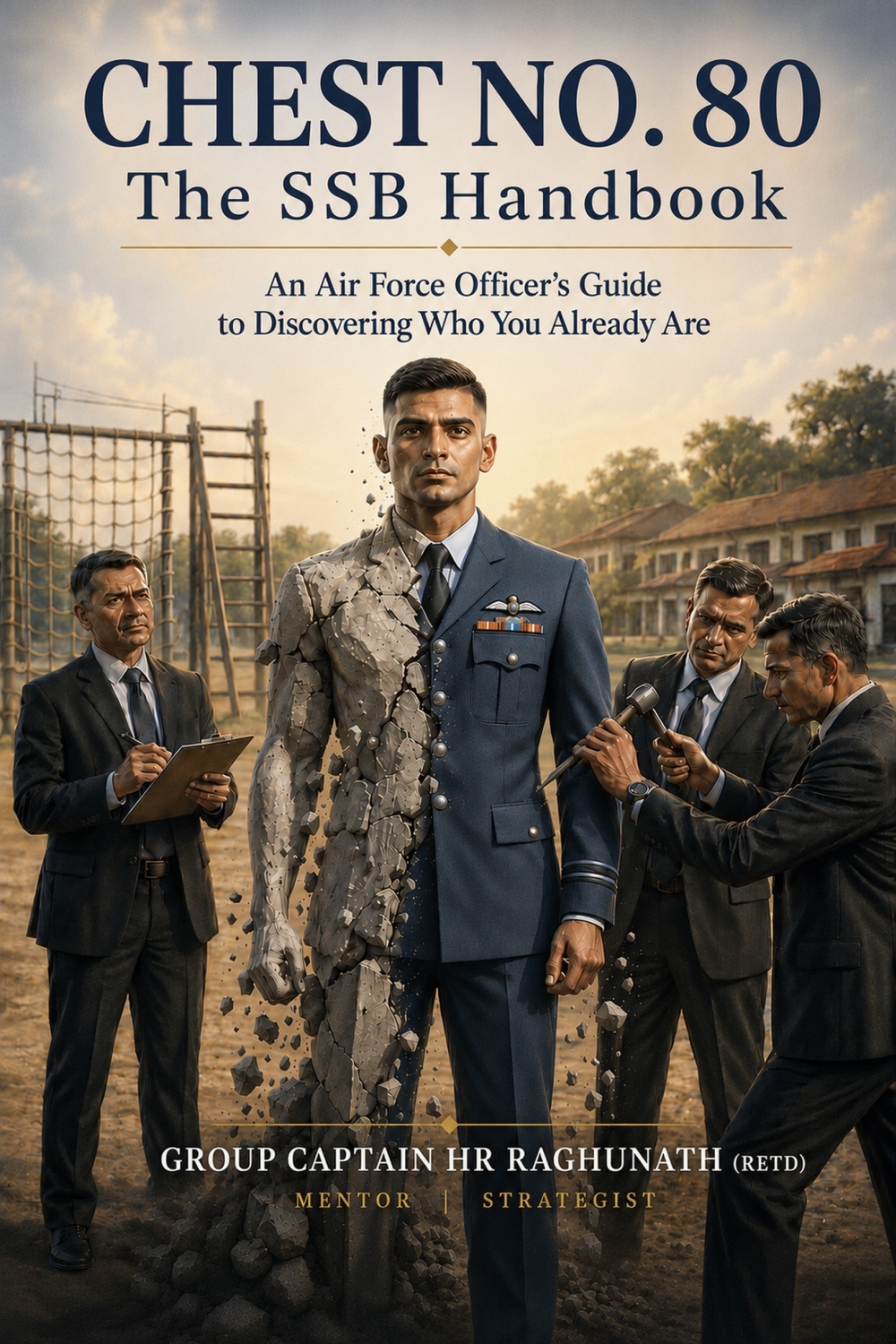
Chest No. 80 — The SSB Handbook, front cover
FRONT COVER images/cover-front.jpg
~1000 × 1580px · portrait, 5.5:8.5

What's inside

Part One — Foundations

  • 1. Understanding the SSB Selection Process
  • 2. Officer Like Qualities (OLQs)
  • 3. Building the Psyche
  • 4. Trainability and Cognitive Intelligence
  • 5. Discipline & Physical Fitness

Part Two — The Psychological Tests

  • 6. Screening Test, OIR & PPDT
  • 7. Word Association Test (WAT)
  • 8. Thematic Apperception Test (TAT)
  • 9. Situation Reaction Test (SRT)
  • 10. Self-Description Test (SDT)

Part Three — The Group Testing Ground

  • 11. Group Testing Officer (GTO) Tasks
  • 12. Beyond the Obstacles
  • 13. Lecturette Preparation
  • 14. Group Discussion Techniques

Part Four — The Interview & The Inner Game

  • 15. Personal Interview
  • 16. Building Daily National Awareness
  • 17. Psychology Tips, Managing Yourself
  • 18. Character Under Fatigue
  • 19. Common Mistakes That Lead to a Conference Out
  • 20. The 30-Day Character Audit

Part Five — After the Recommendation

  • 21. The Medical Board, The Body's Interview
  • 22. Police Verification: The File that Follows You
  • 23. A Day in the Life
  • 24. The Candidates I Have Never Forgotten

Plus six appendices & a full index

Fifteen worked PPDT & TAT stories — including deliberately weak ones, because a story about your suspicion of others teaches more than a model answer does — a medical worksheet, an FAQ, and a preparation journal.

PPDT Worked Examples TAT, Ten Pictures Sample Exercises Medical Worksheet FAQs Reflection Journal

72-entry index, cross-referenced by topic — Officer Like Qualities, tests, medical & verification terms.

Today's Insight

Loading…

Written from three decades adjacent to the table

HR

Group Captain HR Raghunath (Retd)

Founder & CEO, Vayuantriksh Aerospace Consultants · Project Director, AEW&C & UTTAM AESA Radar

Thirty-three years across the Indian Air Force, DRDO, and the aerospace and defence industry — in Radars, Electronic Warfare, Air Defence, and specialised airborne systems. Trained in Electronic Warfare at École Militaire, Paris, and in Cybersecurity at the IITs. He has mentored aspiring candidates preparing for the SSB, and students from IITs pursuing innovation in defence startups.

The SSB has tested this author's family across three generations — his father, all three brothers, and the next generation after them — each clearing their Boards on the first attempt, without ever attending a coaching centre. What they carried in instead was a lifetime of quiet, deliberate habit. That is the principle this handbook is built around.

Get your copy

Digital, immediately. Paperback, delivered.

Ships in India

Paperback

₹349
  • 248 pages, 5.5" × 8.5", printed and shipped on order
  • Available on Amazon.in, Flipkart and the Notionpress store
  • Same text as the eBook, five-part structure and full index
Buy on Amazon → Buy on Notionpress → Flipkart — coming soon
AFFWA

All author royalties from this book are donated to the Air Force Families Welfare Association.